

Building your very own home is a huge milestone, but it requires you to make a lot of decisions—one of the most important being the foundation type you’ll use. After all, the right foundation isn’t just about stability. It also affects the long-term comfort and safety of your home. So, if you’re looking for expert insights into foundation solutions, Powerlift Foundation Repair is here to share some tips that can guide you in making the best choice for your home foundation.
Why Is Choosing the Right Foundation Important?
Picking the wrong foundation for your environment can lead to a number of problems like cracks in foundation walls and water damage. In contrast, a good foundation can handle soil movement, keep moisture from creeping in, and properly support the weight of the property above it, which helps maintain its structural integrity.
That said, not all foundations are created equal. The best choice for your home still depends on factors like the local climate, soil conditions, and your house’s design.
Common House Foundation Types and Their Pros and Cons
Major foundation types come in different forms, and each has its own strengths and potential disadvantages. To help you narrow down your choices, here’s some important information you should know when considering the different types of home foundations:
1. Slab-on-Grade Foundation
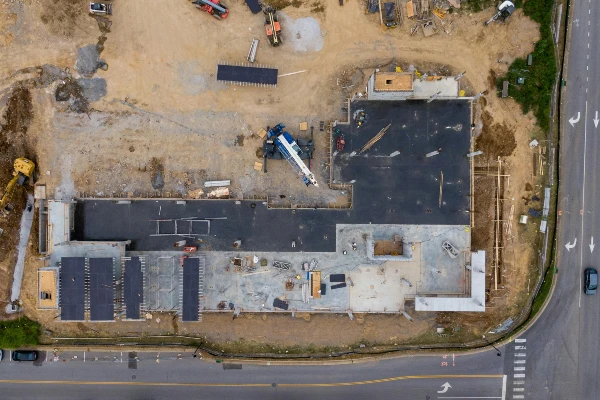
Slab foundations, or slab-on-grade foundations, are exactly what they sound like—a flat slab of concrete poured directly onto the ground. It’s a type of poured-concrete foundation and is one of the simplest and most widely used concrete foundation types in the US.
Best For: Slab foundations work well in warm, dry climates with stable ground or soil. They’re also a solid choice for single-story homes on flat lots.
How It’s Built
- The site is cleared and leveled.
- A layer of gravel or sand is added for drainage.
- Concrete is poured over the prepared surface and left to cure (the process is similar to other types of poured-concrete foundations).
- Steel reinforcements (rebar) are usually added to the concrete slabs for a more durable foundation.
| Pros | Cons |
|---|---|
|
|
2. Crawl Space Foundation
Crawl spaces raise your home a few feet off the ground, leaving a small, ventilated area underneath. These are sometimes grouped with pier foundations but are slightly different in design.
Best For: Crawl spaces are a good option for areas with mild to moderate moisture levels or sloped terrain. They’re commonly used in regions with uneven ground.
How It’s Built
- Concrete footings are poured around the perimeter and at key points under the home.
- Piers or short foundation walls are installed on the footings.
- With crawl space foundations, the home’s floor structure rests on beams or joists above the crawl space.

| Pros | Cons |
|---|---|
|
|
3. Basement Foundation
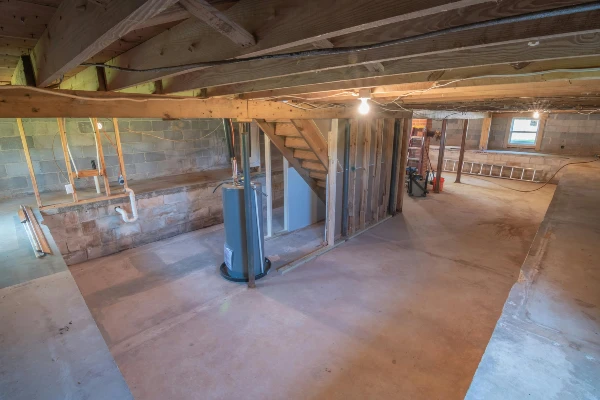
Basement foundations give your home additional living space, especially full basement foundations (as they take up the entire footprint of the house). Due to this extra floor space, it’s a popular choice among homeowners, especially those looking for more storage space. It’s also common in colder climates where deeper foundations are necessary to avoid issues caused by frost.
Best For: Homes in colder climates, like the northern US, benefit most from basement foundations. They’re also great for homeowners who need extra living or storage space.
How It’s Built
- The site is excavated several feet deep.
- Concrete footings are poured at the base of the excavation.
- Load-bearing walls are built using concrete or concrete blocks.
- The basement floor is often a poured concrete slab.
- Waterproofing systems are added to the concrete walls and floors to keep water out.
| Pros | Cons |
|---|---|
|
|
4. Pier and Beam Foundation
Pier and beam foundations are common in areas with unstable soil or uneven terrain. They use piers—vertical supports drilled into the ground—to hold up beams that support the entire structure.
Best For: These foundations are ideal for hilly or uneven terrain and areas with expansive soil like Texas and Oklahoma.
How It’s Built
- Piers are driven deep into the ground, often reaching bedrock for stability.
- Beams or joists are placed horizontally on top of the piers to support the home.
- The floor is constructed above the beams, leaving an open space beneath.

| Pros | Cons |
|---|---|
|
|
5. Hybrid Foundation Systems
As the name suggests, hybrid foundations combine elements from different foundation types to address specific site challenges. For example, a home might use a slab foundation reinforced with piers for extra stability.
Best For: Homes on challenging lots—like those with high water tables, expansive soil, or steep slopes—can benefit from a hybrid foundation.
How It’s Built
- Engineers design a foundation tailored to the site’s needs.
- Construction integrates elements like piers, slabs, or crawl spaces.
- Additional reinforcements are added when necessary.

| Pros | Cons |
|---|---|
|
|
Types of Foundations to Avoid
Not all home foundations are suitable for modern homes. While some may have been common in the past or seem like a low-cost solution, they often come with risks that can lead to a long list of issues. Choosing a foundation type that isn’t suited to your property or today’s standards can lead to long-term problems, pricey repairs, and even structural instability. Here are a few types of foundations that are best avoided:
1. Wood Foundations
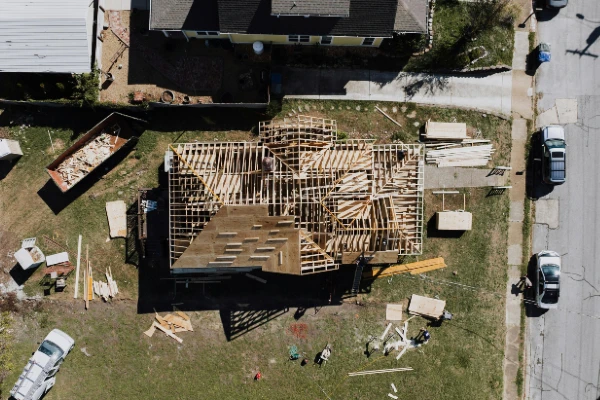
Wood foundations, sometimes referred to as Permanent Wood Foundations (PWFs), are made from pressure-treated lumber and were designed as an alternative to traditional foundation materials like concrete. While a wood foundation can be quick to install and offer some insulation benefits, there’s a reason why it’s rarely used today.
Why to Avoid Them
- Even pressure-treated wood is susceptible to rot and decay over time, especially in areas with high humidity or groundwater.
- Wood attracts termites and other pests, which can compromise the strength of the foundation.
- Wood foundations often require constant maintenance and still don’t last as long as concrete or other materials.
- Modern construction standards generally discourage wood as a foundation material due to its lack of sturdiness and durability.
Exceptions
In very specific cases, like temporary structures or certain rural builds, a wood foundation might be used. However, for long-term residential homes, it’s better to stick with concrete or masonry-based foundations.
2. Stone Foundations
Stone foundations were commonly used in older homes and historic buildings. They involve stacking stones to create a stable base, sometimes reinforced with mortar. While they look great, they don’t meet the performance standards of modern foundations.
Why to Avoid Them
- Stone foundations are prone to water seepage, which can lead to mold and structural weakening.
- Stones are irregular in shape, making it difficult to achieve a level surface. This can cause uneven settling over time.
- Without modern reinforcements, stone foundations degrade faster and can become unstable, especially in areas with freeze-thaw cycles.
- Repairing or reinforcing a stone foundation is labor-intensive and costly.
Exceptions
If you’re restoring a historic property and want to maintain its original appearance, a stone foundation might be worth preserving or reinforcing. Otherwise, using it for a new modern home is generally impractical and outdated.
3. Shallow Foundations in Frost-Prone Areas
Foundations that don’t extend below the frost line are a common issue in cold climates. Frost heave, caused by expanding soil as it freezes, can lift and crack shallow foundations.
Why to Avoid Them
- Frost heave can cause major movement, leading to cracks in walls and floors.
- These foundations often require frequent repairs and reinforcements.
- Shallow foundations aren’t stable enough for multi-story homes or heavy structures.
Exceptions
Shallow foundations might work in warmer climates with no frost concerns. But in areas with freezing temperatures, they’re a gamble you don’t want to take.
What to Consider When Choosing a Home Foundation
There’s no universal answer to which foundation is the best. Your choice will ultimately depend on:
- Soil Conditions or Soil Type: Clay, sandy, or rocky soil can affect how a foundation performs.
- Climate: Cold regions may require deep foundations, while warm, dry areas work well with slabs.
- Budget: Slabs are the most affordable, while basements and hybrids cost more upfront but can help you save money in the long run.
- Home Design: Larger homes or multi-story buildings may need stronger foundations like basements or piers.
Call Powerlift Foundation Repair for Expert Advice and Service
When you have experts to guide you, choosing the right foundation won’t feel as overwhelming. At Powerlift Foundation Repair, we’ve spent years helping homeowners build and maintain strong, reliable foundations with services like residential foundation repair and foam jacking foundation repair.
So, if you’re planning a new build or need help with an existing foundation, feel free to give us a call at 1-800-562-5438!