

Your home’s foundation is quite literally what everything else rests on, yet most homeowners rarely give it a second thought until something goes wrong. The problem with that approach is that foundation issues tend to get worse over time — and the longer they go unaddressed, the more expensive repairs become. A proactive DIY foundation inspection can help you catch potential problems early, protect your property, and save you significant money before small cracks turn into structural issues that demand costly professional intervention.
At Power Lift Foundation Repair, we’ve seen firsthand how small warning signs can develop into major structural problems when left unchecked. While routine inspections can help you stay ahead of trouble, some issues require the trained eye of experienced professionals. Our team is here to evaluate concerns, provide honest recommendations, and deliver reliable solutions when your home needs more than a DIY approach.
In this blog, we’ll walk you through exactly how to inspect your home’s foundation, what to look for, and when it’s time to call in our team for professional help.

Why DIY Foundation Inspections Matter
A typical foundation inspection performed by a professional can cost anywhere from $300 to $1,000 or more. While a professional foundation inspection is absolutely worth it when you suspect serious damage, most homeowners can learn to spot the early warning signs of foundation problems on their own — and doing so regularly is one of the smartest things you can do as a property owner.
Foundation damage rarely appears overnight. It develops gradually through soil movement, water damage, settling, poor drainage, and the natural aging of materials like poured concrete or concrete slab systems. By walking your home’s interior and exterior with a critical eye a couple of times per year, you give yourself the best chance of catching concern areas early, before they escalate into expensive repairs.
What You’ll Need Before You Begin
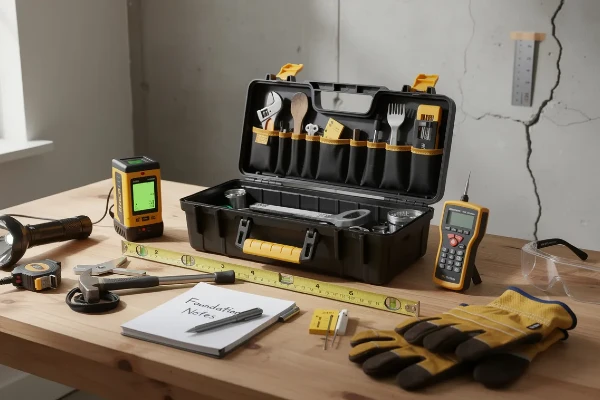
You don’t need specialized equipment to conduct a solid DIY home inspection checklist walkthrough. Gather the following before you start:
- A flashlight or headlamp
- A level (even a small torpedo level works)
- A tape measure
- A notepad or phone to note observations and take photos
- A screwdriver or probe for testing wood integrity in crawl spaces
- Safety gear including gloves and a dust mask if you’ll access a basement or crawl space
Once you have your tools, you’re ready to begin.
Step 1: Start with the Exterior
Walk the full perimeter of your house slowly and methodically. You’re looking for visible signs of movement, cracking, or shifting in the exterior walls and foundation walls themselves.
- Cracks in the foundation and exterior walls are your first major area of focus. Not all cracks are created equal. Vertical cracks that run straight up and down are often the result of normal concrete curing and settling, and while they should be monitored, they’re typically less alarming on their own. Horizontal cracks, on the other hand, are a more serious sign. They often indicate lateral pressure from soil pushing against your foundation walls, which can point to genuine structural issues that need to be addressed quickly. Stair-step cracks — those that follow the mortar joints diagonally — are another red flag, particularly in brick or block foundations.
- Note the width of any cracks you find. Small cracks under 1/8 inch may simply be cosmetic, but anything wider than 1/4 inch warrants a closer look from a professional.
- Gaps between walls and other elements — such as gaps where the foundation meets the sill plate, or gaps appearing around window frames and door frames — can also be evidence of foundation movement. If you notice gaps that seem to have appeared recently or have grown, that’s a sign worth investigating further.
- Assess your grading and drainage. Walk around and observe whether the ground slopes toward or away from your house. Ideally, the soil should slope downward away from your home so that water drains away from the foundation. Poor drainage is one of the leading contributors to foundation damage over time. While you’re at it, check your gutters. Clogged or broken gutters can direct large volumes of water directly against your foundation, accelerating deterioration.

- Look for leaning chimneys. Leaning chimneys are sometimes overlooked but can be a sign of foundation settling or shifting on one side of the house. If your chimney appears to be pulling away from the structure or leaning noticeably, make a note of it.
Step 2: Move Inside — Main Living Areas
Once you’ve completed your exterior walkthrough, head inside. You’ll want to cover every main floor room as well as any upper floors.
- Check your floors first. Uneven floors, sloping floors, and sagging floors are all potential signs of foundation problems. You can use your level here to get a more objective read on whether floors are noticeably off-level. A small amount of variation is normal in older homes, but significant slopes — particularly ones that have gotten worse over time — deserve attention.
- Test your windows and doors. Sticking windows and doors that no longer open or close properly are a classic sign that your home’s structure has shifted. When a foundation moves, it puts stress on the frame of the house, which causes door frames and window frames to fall out of square. If you notice multiple doors or windows throughout the house that suddenly stick or have gaps around them, that pattern is more concerning than a single sticking door that could be explained by humidity alone.
- Inspect walls and ceilings. Look for cracks running along your interior walls or ceiling. Pay particular attention to diagonal cracks that radiate from the corners of windows and doors — these often point to foundation movement.
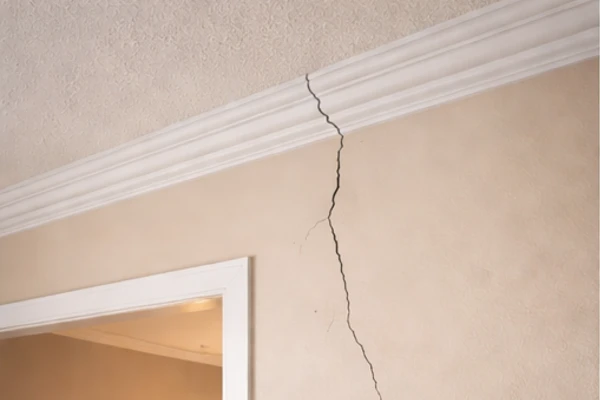
Also, look for places where the wall meets the ceiling and check for any separation or bowing.
- Watch for signs of water damage and mold. Water stains on walls or floors, mold growth in corners, and musty odors can all indicate that moisture is getting in somewhere it shouldn’t — often through cracks or gaps in the foundation. Mold doesn’t just signal a moisture problem; it can also point to ongoing foundation damage that’s allowing water to penetrate your home.
Step 3: Inspect the Basement or Crawl Space
If your home has a basement or crawl space, this is often where foundation problems first become visible, so don’t skip this step even if access is inconvenient.
- In the basement, look closely at the foundation walls for horizontal cracks, vertical cracks, or any bowing or bulging. Run your hand along the wall — efflorescence (a white chalky residue) is evidence that water has been pushing through the concrete, even if the wall feels dry at the moment. Check for any evidence of water pooling on the floor or staining along the base of the walls.
- In a crawl space, you’re looking for similar signs: cracks in the foundation walls, signs of water damage or standing water, wood rot, mold, and any areas where the structure above seems to be settling or sagging. Bring your flashlight and probe any wooden beams or supports that look soft or discolored — wood rot in a crawl space can compromise structural integrity significantly.
- Also take note of your plumbing while you’re down there. Cracked or shifted pipes can sometimes be a secondary sign of foundation movement, particularly if sections of plumbing that were once properly aligned have shifted out of position.

Step 4: Use Your Foundation Inspection Checklist
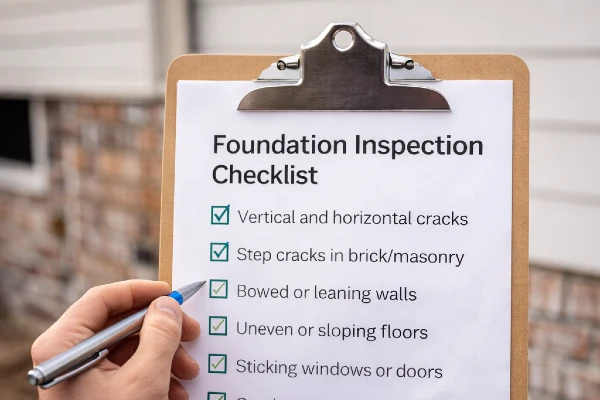
As you move through each area of your home, it helps to have a foundation inspection checklist to keep you organized and ensure you don’t miss anything. Here’s a quick reference:
- Exterior checklist: visible cracks in foundation walls, gaps around windows and doors, soil grading and drainage, gutter condition, leaning chimneys, separation between foundation and siding.
- Interior checklist: uneven or sloping floors, sticking windows and doors, cracks in interior walls and ceilings, signs of water damage or mold, gaps at wall and ceiling junctions.
- Basement/crawl space checklist: horizontal cracks and vertical cracks in walls, bowing or bulging foundation walls, efflorescence or moisture staining, wood rot or mold, plumbing alignment.
- Document everything with photos. Even if something doesn’t seem like a major concern right now, having a photographic record makes it much easier to assess whether the issue has worsened the next time you inspect.
Step 5: Know When to Call a Professional
A DIY foundation inspection is a valuable tool, but it has limits. There are certain signs of foundation problems that should prompt you to contact a professional foundation inspector without delay.
Call a professional if you notice horizontal cracks in your foundation walls, significant bowing or bulging, multiple doors and windows that stick or have gaps, sagging or severely sloping floors, or any crack that is growing over time. A detailed report from a qualified home inspector or structural engineer will give you a clear picture of your foundation’s condition and what — if any — foundation repairs are needed.
Some foundation repair companies offer a free inspection, which can be a worthwhile starting point if you’ve spotted potential foundation problems but aren’t yet sure of their severity. Keep in mind that a free inspection from a repair contractor is not the same as an independent evaluation, so for significant concerns, an independent structural engineer’s assessment is worth the investment.
Waiting rarely makes foundation issues cheaper. If potential issues are identified early, your repair options are typically less invasive and less expensive. Catching a small crack before it becomes a structural problem could save you tens of thousands of dollars in foundation repairs down the line.
Stay Ahead of Foundation Problems

Making DIY foundation inspections part of your regular home maintenance routine — ideally twice a year, in spring and fall — puts you in a much stronger position as a homeowner. You’ll know your home’s foundation better than anyone, which means you’ll notice changes faster. Pair your inspections with good habits like keeping gutters clean, managing drainage around the perimeter of your house, and maintaining appropriate soil moisture levels during dry seasons.
At Power Lift Foundation Repair, we encourage homeowners to stay proactive, but we also know that some warning signs require professional evaluation. Your foundation is the most important structural element of your home, and taking a few hours each year to inspect it carefully isn’t just smart maintenance — it’s one of the best investments you can make in protecting the long-term value and safety of your property.
If you notice cracks, uneven floors, sticking doors, or other signs of foundation movement, don’t wait for the problem to get worse.
Contact us today for a professional assessment and expert solutions you can trust. Our team is here to help protect your home from the ground up.
