

A solid foundation is crucial for any building, but traditional construction methods often rely on materials with a heavy environmental footprint. As we strive for more sustainable practices, it’s essential to explore eco-friendly options that don’t compromise on durability. This blog delves into the possibilities of creating a solid foundation using suitable materials that minimize environmental impact while ensuring the longevity of the building process. Let’s explore how energy efficiency and eco-friendly materials can be integrated into this fundamental aspect of construction.
Related Article: How to Handle Foundation Issues When Planning a Renovation
Environmentally Friendly Foundation Materials
There are several eco-friendly options available for foundation construction that prioritize sustainability and environmental responsibility. Here are some notable foundation materials and methods:
Recycled Concrete and Aggregates
Recycled concrete and aggregates reduce the demand for virgin materials and minimize the environmental impact of concrete production. Key benefits include:
Reduced Resource Consumption: Saves energy and resources by reusing existing materials instead of producing new ones.
Lower Carbon Footprint: Minimizes the greenhouse gas emissions associated with concrete production.
Best Suited For: Areas with access to reclaimed materials and moderate climate conditions where high load-bearing capacity is not a primary concern.

Deep Foundations
Deep foundations, such as piles or caissons, are used in challenging soil conditions. Key benefits include:
Stability in Poor Soil: Provides reliable support in unstable areas.
Material Selection: Careful design can minimize environmental impact through efficient use of materials.
Best Suited For: Locations with poor soil conditions, such as sandy or clayey soils, and areas prone to flooding, including coastal regions and areas with significant seismic activity.
Mat Foundations
Mat foundations consist of a large concrete slab covering the entire building footprint. Key benefits include:
Material Efficiency: Can be designed to reduce material usage while providing adequate support.
Stability: Distributes loads evenly, making it suitable for various soil conditions.
Best Suited For: Areas with uniform soil conditions and moderate loads, ideal for coastal regions and sites with expansive soil.
Fly Ash Concrete
This concrete uses fly ash as a replacement for a portion of the cement in concrete, significantly reducing greenhouse gas emissions. Key benefits include:
Strength and Durability: Fly ash concrete is known for its strength and durability, making it a reliable choice for foundations.
Lower Emissions: Produces less carbon dioxide compared to conventional concrete.
Best Suited For: Regions with harsh winters and areas where traditional concrete’s environmental impact is a concern.

Wood Foundations
In appropriate climates, wood foundations can be a sustainable option. Key benefits include:
Natural Material: Treated wood can provide a durable and eco-friendly base.
Low Environmental Impact: When sourced sustainably, wood has a lower carbon footprint compared to concrete.
Best Suited For: Mild climates with stable soil conditions, particularly in regions where wood is a locally available resource.
Frost-Protected Shallow Foundation
Frost-protected shallow foundations are designed to minimize concrete use and are suitable for stable soil conditions. Key benefits include:
Reduced Concrete Usage: Options like slab-on-grade and crawl spaces can minimize the amount of concrete needed.
Energy Efficiency: Helps maintain stable temperatures, reducing heating costs.
Best Suited For: Areas with a low risk of frost heave, such as regions with mild winters and gentle slopes.
Rammed Earth
Rammed earth is an ancient technique that involves compacting soil into forms to create sturdy foundation walls. Key benefits include:
Low-Cost Solution: It is a cost-effective option suitable for certain climates and soil conditions.
Natural Materials: Utilizes locally sourced materials, reducing transportation emissions.
Best Suited For: Arid and semi-arid regions with stable soil conditions, such as parts of the Southwestern United States

Precast Concrete Foundation
Precast concrete slabs are manufactured off-site and transported to the construction site. Key benefits include:
Energy Efficiency: Their production requires less energy compared to traditional poured concrete methods.
Durability: Strong and capable of withstanding various weather conditions.
Best Suited For: Urban areas with access to manufacturing facilities, and regions where quick construction is beneficial, such as coastal areas with high humidity.
Green Building Blocks
Faswall blocks are made from a blend of concrete and recycled wood. Key benefits include:
High Recycled Content: Composed of 60% recycled wood, contributing to reduced waste.
Improved Indoor Air Quality: They do not off-gas harmful chemicals, promoting healthier living environments.
Best Suited For: Regions with mild climates and high humidity, where indoor air quality is a priority.
Insulated Concrete Forms (ICFs)
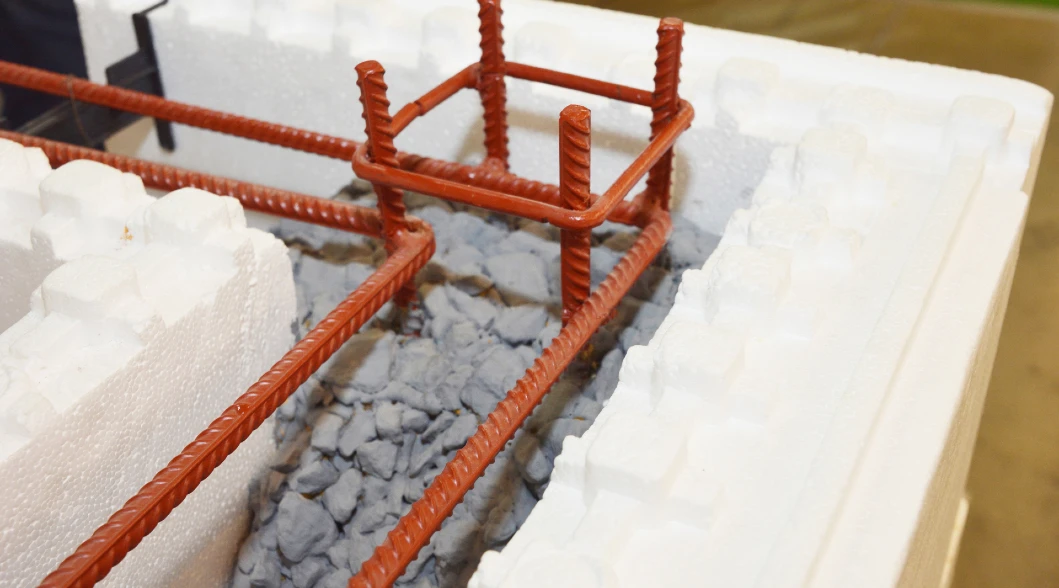
ICFs consist of expanded polystyrene (EPS) or other insulating materials sandwiched between concrete layers. This construction method offers:
Energy Efficiency: Provides excellent insulation, reducing heating and cooling costs by up to 50%.
Durability: Resistant to moisture, pests, and extreme weather conditions.
Reduced Carbon Footprint: The use of recycled materials in some ICF products contributes to sustainability.
Best Suited For: Cold climates where insulation is crucial and areas prone to hurricanes or tornadoes due to their superior resistance to wind and moisture.
Hempcrete
Hempcrete is a biocomposite made from hemp hurds and lime. Key benefits include:
Carbon Negative: The cultivation of hemp absorbs more CO2 than is emitted during its processing.
Natural Insulation: Provides excellent thermal and acoustic insulation properties.
Best Suited For: Areas with moderate to warm climates, where its insulating properties can be fully utilized.
Helical Pile Foundations
Helical pile foundations consist of steel shafts with helical blades that are screwed into the ground. Key benefits include:
Minimal Environmental Impact: Requires minimal excavation, reducing soil disturbance and potential erosion.
Reduced Material Usage: Often requires less material than traditional foundations, lowering the embodied energy and carbon footprint.
Reusability: Can be removed and reused in different locations, further reducing waste.
Rapid Installation: Quicker and less disruptive installation process, minimizing noise and vibration pollution.
Best Suited For: Areas with challenging soil conditions, such as rocky terrain, wetlands, and locations prone to flooding, including coastal and seismic zones.
Rubble Trench Foundations
Rubble trench foundations involve digging a trench around the perimeter of a building and filling it with loose stones or rubble. Key benefits include:
Improved Drainage: Acts as a natural drainage system, preventing water buildup and reducing the risk of frost heave.
Reduced Concrete Use: Minimizes the amount of concrete required, lowering environmental impact.
Cost-Effective: The use of readily available materials can significantly reduce construction costs.
Best Suited For: Regions with poor drainage and stable soils, such as the desert Southwest and coastal areas with high water tables.

Pier Foundations
Pier foundations consist of individual columns supporting the structure. Key benefits include:
Minimal Soil Disturbance: Requires less excavation compared to other foundation types, reducing soil erosion and habitat disruption.
Material Efficiency: Generally uses less concrete than slab or foundation wall systems, lowering the overall carbon footprint.
Flexibility: Can be adapted to various soil conditions, reducing the need for extensive site preparation and additional materials.
Adaptability to Changing Conditions: Can be adjusted or elevated more easily than other foundation types in areas prone to climate change impacts.
Best Suited For: Areas with varying soil conditions and high water tables, such as flood-prone regions and locations with unstable soils.
Additional Considerations
Soil Stabilization
Proper soil preparation and stabilization can reduce the amount of concrete required for the foundation.
Foundation Insulation
Insulating the foundation can significantly improve energy efficiency and reduce heating and cooling costs.
Water Management
Effective water management systems can prevent moisture-related issues and reduce the need for additional materials.
By carefully considering these options and working with experienced professionals, you can create a solid and sustainable foundation for your building project.
Caisson Foundations: A Sustainability Challenge
Caisson foundations, large structures sunk into the ground, are crucial in challenging soil conditions. However, they pose significant environmental challenges due to their concrete-intensive construction, soil disturbance, and energy consumption.
To mitigate these impacts, consider using lower-carbon concrete, optimizing caisson design, and employing sustainable construction techniques. While caissons remain essential in certain situations, careful planning and execution are vital for minimizing their environmental footprint.
Beat the Freeze: Frost-Protected Shallow Foundation
Building in a region notorious for its icy grip? A frost-protected shallow foundation might be your ideal solution. Unlike traditional foundations that require digging deep to avoid frost heave, this innovative approach utilizes foam insulation to elevate the frost line, allowing for a shallower foundation.
Scandinavian countries have been successfully using this method for over four decades in millions of homes. To determine the foundation depth needed for your specific location, builders rely on the Air Freezing Index (AFI), which measures the severity of winter temperatures over an 11-year period.
This foundation type is particularly well-suited for homesites with gentle slopes. The potential cost savings compared to conventional slabs can be substantial, often reaching $8,000 to $10,000. However, while this option offers economic benefits, newer technologies like Insulated Concrete Forms (ICFs) might provide even greater energy efficiency and resilience.
If you’re considering a frost-protected shallow foundation, consulting with a PowerLift Foundation expert is crucial to guarantee its suitability for your specific climate and soil conditions.
PowerLift Eco-Friendly Foundation Materials
A strong foundation is the cornerstone of any building structure, providing essential support for your entire living space. Whether you’re building a new home or renovating an existing one, choosing the appropriate foundation is crucial. While traditional concrete walls have been a popular choice, exploring eco-friendly alternatives and innovative techniques like frost-protected shallow foundations can lead to significant benefits. By carefully considering your project’s specific needs and environmental impact, you can create a solid and sustainable foundation for your construction project. Let PowerLift help you find the perfect foundation for your dream home.
Contact us today to discuss your options and get started on building a strong, durable, and environmentally responsible building foundation using durable materials
We serve clients all over Arizona, Arkansas, North Carolina, Tennessee and Oklahoma. So, if you’re looking for foundation options, PowerLift in Ada, OK is here to help.