
When a structure begins to settle, crack, or shift, the integrity of its entire foundation is at risk. For homeowners, commercial property managers, and construction professionals alike, finding a reliable, cost-effective, and minimally invasive solution is essential. Foundation helical pier shave emerged as one of the most trusted deep foundation solutions available today — offering a proven method for stabilizing sinking foundations, supporting new construction, and completing demanding retrofit projects with minimal disturbance to the surrounding area.
This blog covers everything you need to know about helical piers: what they are, how the helical pier installation process works, their several advantages over other repair methods, and when they represent the best choice for your project requirements.
What Are Foundation Helical Piers?
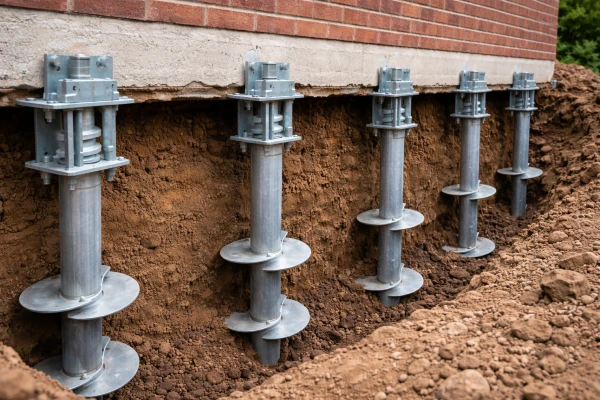
A helical pier, also commonly referred to as a helical screw pile or helical pile, is a deep foundation element made from a steel shaft with one or more helical plates (or flights) welded along its length. These plates are engineered in a true helix form, which allows the pier to be screwed directly into the ground rather than driven with impact force, the way driven piles are installed.
Available in both square shaft and round shaft configurations, helical pier foundations are used across residential, commercial, and industrial applications. The square shaft design is typically preferred for smaller loads and tighter spaces, while the round saft variant handles heavier loads and extended depths. Together, these configurations cover virtually every project scenario — from underpinning existing residential structures to supporting wind turbines, retaining walls, and large-scale commercial buildings.
How the Helical Pier Installation Process Works
One of the defining features of helical piers is how straightforward and efficient the installation process is compared to traditional foundation repair methods. There is no need for extensive excavation, large machinery, or lengthy curing times. Here is a step-by-step overview of how contractors install helical piers:
- Site assessment and soil evaluation: Before installation begins, a qualified contractor evaluates soil conditions at the site. Understanding soil types, load-bearing capacity, and the depth of competent soil helps determine the number of piers needed, the appropriate pier configuration, and the required torque applied during installation.
- Access and minimal excavation: Unlike concrete underpinning methods that require significant excavation, helical pier installation requires only a small amount of access digging around the footing or foundation wall. This is a major advantage for projects with limited access, tight crawl spaces, or finished landscaping in the surrounding area.
- Hydraulic installation equipment: Specialized hydraulic equipment rotates the pier into the ground. As it advances, the helical plates cut through the soil cleanly — minimizing soil disturbance and preserving the integrity of the ground around the structure. This is what sets helical screw piles apart from driven piles, which can cause significant ground movement.

- Reaching load-bearing soil: The pier is advanced until it reaches stable, load-bearing soil or bedrock. Depth varies by project — some piers extend only a few feet, while others reach 20, 30, or even 50+ feet deep for demanding industrial applications or unstable soil conditions.
- Bracket attachment and load transfer: Once the pier is installed at the correct depth and torque, a steel bracket is attached to the existing foundation or footing. This bracket transfers the structural load from the foundation to the pier, which then distributes it to the competent soil below. The structure is then lifted, stabilized, or held in place as needed.
- Completion and site restoration: Because the process requires minimal disturbance and no concrete curing time, the job is typically complete within one to two days. The excavated areas are backfilled, and the surface is restored — allowing property use to resume almost immediately.
The Key Benefits of Helical Piers for Foundation Repairs
Helical piers offer several advantages over conventional foundation repair and deep foundation methods. Whether you are addressing foundation repairs on an existing structure or planning new construction, the benefits are compelling.
Minimal Soil Disturbance
Because helical piers are screwed into the ground rather than hammered or cast in place, they cause minimal soil disturbance during installation. Unlike driven piles, which displace large amounts of soil and can destabilize the surrounding area, helical screw piles advance cleanly through the ground. This is especially critical near existing structures, where excessive ground movement could cause additional damage to already compromised foundations.
Minimal Soil Disturbance

Because helical piers are screwed into the ground rather than hammered or cast in place, they cause minimal soil disturbance during installation. Unlike driven piles, which displace large amounts of soil and can destabilize the surrounding area, helical screw piles advance cleanly through the ground. This is especially critical near existing structures, where excessive ground movement could cause additional damage to already compromised foundations.
Speed and Efficiency
The speed of helical pier installation is one of its greatest practical advantages. A skilled crew can install multiple piers in a single day, and because no concrete is involved, there is zero cure time. Foundation repairs and new construction projects that once required weeks can now be completed in days — dramatically reducing labor costs and minimizing disruption to the property and its occupants.
Exceptional Load-Bearing Capacity
A properly installed helical pier achieves impressive load-bearing capacity by anchoring into competent, stable soil well below the zone affected by frost, drought, or erosion. The torque applied during installation provides a real-time measurement of the soil resistance — giving engineers and contractors a reliable indicator of the pier’s actual bearing capacity. This makes helical piers an inherently verifiable deep foundation solution, unlike some traditional methods where bearing capacity can only be estimated.
Versatility Across Soil Types and Project Types
Helical piers perform well across a wide range of soil types and conditions. Whether the ground consists of soft clay, sandy fill, loose gravel, or expansive soils prone to shrinking and swelling, helical piles can be designed to reach stable bearing strata below. This versatility makes them suitable for foundation repairs on existing residential homes, large commercial builds, decks, retaining walls, industrial applications, and even utility-scale projects such as wind turbines. They are also exceptionally useful for retrofit projects where preserving the existing structure and landscape is a priority.
Performance in Limited Access Environments
Many foundation repairs occur in spaces where large equipment simply cannot fit — crawl spaces, tight urban lots, finished basements, or interior slabs.
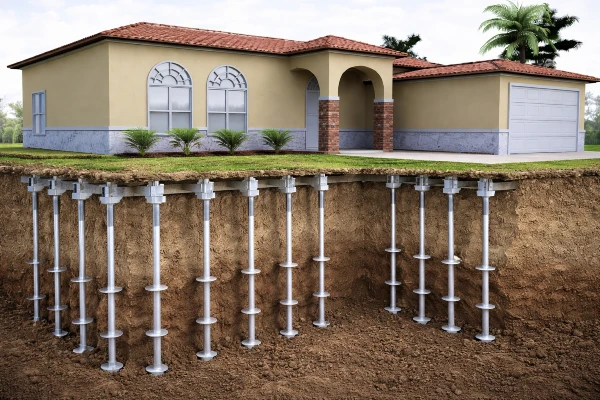
Helical pier installation equipment is compact and efficient, capable of operating in areas with limited access where traditional underpinning or concrete pier methods would be impossible or prohibitively expensive. This makes helical piers the go-to choice for contractors working on existing residential and commercial structures in confined environments.
A Cost-Effective Deep Foundation Solution
When you factor in reduced labor costs, faster installation speed, and the elimination of concrete and extensive excavation, helical piers consistently prove to be a cost-effective alternative to conventional deep foundation methods. There are no delays waiting for poured concrete to cure, no heavy cranes or large excavation equipment required, and the restoration of the site is minimal. For property owners and developers managing tight budgets and tight schedules, this combination of efficiency and economy is hard to match.
Ideal Applications for Helical Piers
Helical piers are commonly used across a broad spectrum of construction and repair scenarios. Some of the most widely seen applications include:
- Foundation repairs on existing residential and commercial properties — addressing sinking foundations, cracked walls, and uneven floors caused by unstable soil or soil erosion.
- New construction on challenging soils — providing a stable foundation in areas where spread footings or shallow foundations are not viable due to poor soil conditions.
- Deck and porch footings — offering a frost-protected, highly durable alternative to traditional poured concrete footings for decks and outdoor structures.
- Retaining walls — providing lateral and vertical support for walls subject to soil pressure, slope instability, or ground movement.
- Industrial and infrastructure projects — including transmission towers, pipeline supports, wind turbines, and other installations requiring deep, reliable load transfer into competent soil.
Helical Piers vs. Driven Piles and Concrete Piers
It is worth understanding how helical piers compare to alternative deep foundation solutions, particularly driven piles and concrete piers.
Driven piles are installed by hammering or vibrating steel or concrete elements into the ground. While effective for certain large-scale applications, driven piles generate significant ground movement and vibration — making them poorly suited for use near existing structures or in sensitive soil conditions. The noise and disruption associated with driven pile installation also make them impractical in residential neighborhoods.
Concrete piers require extensive excavation and multiple days of curing time before a load can be applied. This significantly extends the project timeline and increases labor costs. Additionally, concrete is vulnerable to moisture and ground movement over time, while helical piers made from galvanized steel maintain their structural integrity for decades.
Helical piers, by contrast, can be installed quickly with minimal disturbance, are load-tested in real time via torque monitoring, and are immediately ready to bear structural loads upon installation. For foundation repairs, retrofit projects, and new construction on difficult soils, helical piers represent a clearly superior and efficient solution across most project requirements.
Choosing the Right Contractor to Install Helical Piers
The long-term performance of a helical pier foundation depends heavily on proper design and installation. When selecting a contractor for your project, look for the following:
- Proven experience with helical pier installation across a range of soil types and project requirements
- Use of torque monitoring equipment to verify load-bearing capacity in real time during installation
- Comprehensive site assessment before recommending pier depth, shaft type, and helix configuration
- Transparent pricing that accounts for all project factors — including depth, the number of piers required, soil conditions, and site access
- A track record of successful foundation repairs, new construction projects, and commercial or industrial applications
Protect Your Property with a Proven Deep Foundation Solution
Foundation helical piers represent the intersection of engineering precision and practical efficiency. Whether you are addressing foundation repairs on an existing residential home, completing a commercial build on challenging ground, or undertaking a major infrastructure or industrial project, helical piers deliver the load-bearing capacity, installation speed, and long-term stability that the job demands.
Their ability to reach stable, load-bearing soil through minimal disturbance installation — while immediately bearing structural loads upon completion — makes them one of the most complete and versatile foundation solutions available. With the right contractor and proper engineering design, foundation screws deliver a stable foundation that protects your structure for generations to come. Contact PowerLift Foundation Repair today to learn how our helical pier systems can solve your foundation challenges.