

Sunken concrete is a common problem for many property owners. Over time, concrete surfaces such as driveways, sidewalks, patios, and pool deck areas can begin to sink or shift due to soil compression, erosion, or unstable soil beneath the slab. When this happens, the result is uneven concrete that can cause safety hazards, drainage issues, and costly structural problems if left unaddressed.
At Powerlift, we specialize in professional concrete lifting and foundation repair solutions designed to restore stability and extend the life of your property. Many homeowners in ask us about the difference between mudjacking vs foam injection when considering concrete leveling. Both methods can raise sunken concrete, but they use very different materials and techniques.
Understanding the key differences between these two methods can help property owners choose the best concrete repair method for their specific situation.
Why Concrete Sinks in the First Place
Concrete slabs are strong, but their performance depends heavily on the condition of the underlying soil. When the soil beneath the slab shifts or erodes, the slab can lose support and begin to sink.
Several factors commonly contribute to sunken concrete:
- Soil compression beneath the slab
- Poor drainage that washes away supporting soil
- Unstable soil conditions
- Expansion and contraction due to weather changes
- Voids forming under concrete surfaces
Once these voids develop beneath the concrete slab, the slab may begin to tilt, crack, or sink. At that point, a professional concrete lifting method is needed to restore the slab to its original position.
Two common repair options used today are traditional mudjacking and polyurethane foam jacking.
What Is Mudjacking?
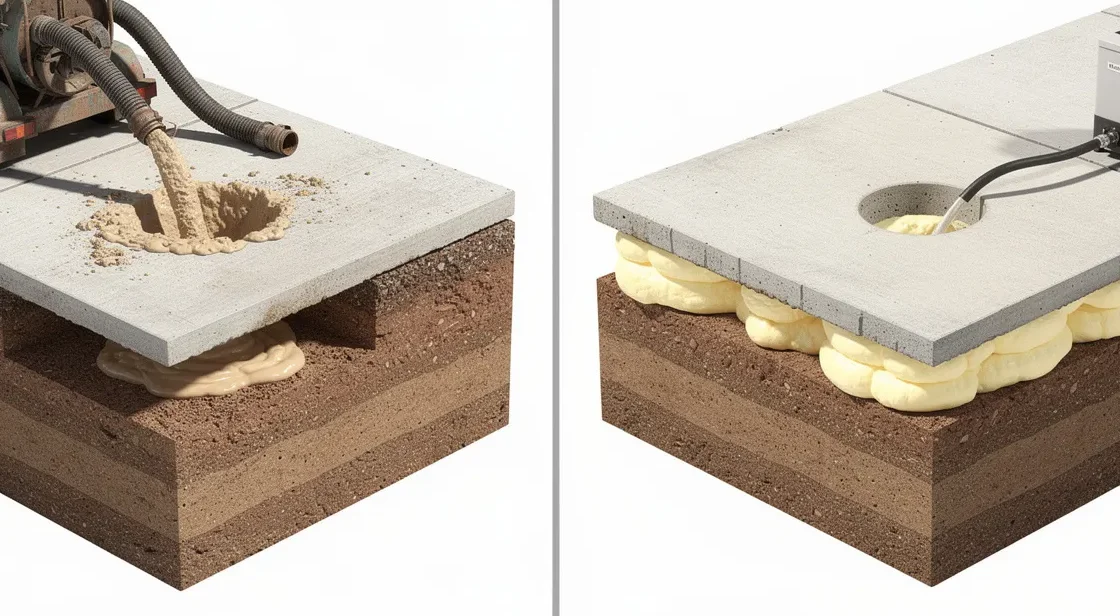
Mudjacking is a traditional method used for concrete leveling for decades. The process involves pumping a slurry mixture underneath the slab to lift it back to level.
The mudjacking material is typically made from natural materials such as cement, sand, and water. Contractors drill holes into the concrete and pump the mixture underneath the slab. As the slurry fills voids beneath the slab, it raises the concrete.
How Mudjacking Works
The traditional mudjacking process includes several steps:
- Large mudjacking holes are drilled into the concrete slab.
- A mixture of cement, sand, and water is pumped through the holes.
- The slurry fills the empty spaces beneath the slab.
- Pressure lifts the slab to restore the level concrete.

Mudjacking has been widely used as a concrete repair method and remains common for some projects.
What Is Polyurethane Foam Injection?
A more modern alternative to mudjacking is polyurethane concrete raising. Instead of using a heavy slurry mixture, this method uses expanding polyurethane foam to lift the slab.
During the process, small holes are drilled into the slab, and liquid foam is injected beneath the surface. The foam expands and fills voids under the slab while gently lifting the concrete.
At Powerlift, one of the most effective modern techniques we use is polyurethane foam injection, which provides a precise and efficient way to raise sunken concrete with minimal disruption.
The foam quickly hardens and stabilizes the underlying soil, creating a durable support structure beneath the slab.
Mudjacking vs Foam Injection: Key Differences
When comparing mudjacking vs foam injection, several important differences stand out.
Injection Hole Size
Mudjacking requires large holes drilled into the slab, which may remain noticeable after the repair.
Polyurethane foam lifting requires a smaller injection hole, which results in a cleaner appearance after the repair is completed.
Material Weight

Mudjacking material made from cement and sand adds significant weight beneath the slab. This extra weight may contribute to future settling if the underlying soil remains unstable.
Polyurethane foam is extremely lightweight. Because polyurethane utilizes expanding foam rather than heavy materials, it places far less pressure on the soil.
Cure Time
Traditional mudjacking typically requires several hours before the repaired area can handle foot or vehicle traffic.
Polyurethane foam lifting has a much faster cure time. In most projects, the foam cures in just a few hours, allowing property owners to use the surface again the same day.
Precision of Lifting
Mudjacking can raise slabs effectively, but it may not provide the same level of precision.
Polyurethane injection allows experienced professionals to achieve more precise lifting because the foam expands gradually. This allows contractors to carefully control how much the slab moves during the repair process.
Water Resistance
Mudjacking material can absorb water over time, which may weaken the repair if drainage issues are present.
Polyurethane foam is highly water-resistant. This helps protect the slab and prevent future settling caused by moisture.
Advantages of Mudjacking
Although foam lifting has become increasingly popular, mudjacking still has some advantages.
Lower Initial Cost

Mudjacking is often less expensive than polyurethane concrete lifting, making it appealing for property owners working within a limited budget.
Long History of Use
Mudjacking has been used as a concrete raising solution for decades. Many contractors are familiar with the method and continue to use it for certain types of repairs.
Natural Materials
The mudjacking material contains cement and sand rather than synthetic materials, which some property owners prefer.
Disadvantages of Mudjacking
Despite its long history, mudjacking also has several disadvantages.
Larger Holes
The large holes required for mudjacking may remain noticeable after repairs.
Additional Weight
The slurry mixture adds significant weight beneath the slab, which can contribute to additional settling.
Longer Cure Time
Mudjacking repairs may require a longer wait before the surface can support traffic.
Potential for Future Settling
If unstable soil conditions remain, the slab may eventually sink again.
Advantages of Polyurethane Foam Lifting
Polyurethane foam lifting has several distinct advantages that make it a superior alternative in many cases.
Minimal Disruption
Foam lifting requires smaller holes and causes minimal disruption to the surrounding concrete surfaces.
Lightweight Material
The foam adds very little weight to the underlying soil, helping prevent future settling.

Faster Repairs
Many foam lifting repairs can be completed within a few hours.
High Compressive Strength
Polyurethane foam has strong compressive strengths that help stabilize the slab and support heavy loads.
Water Resistance
The foam does not absorb water, which helps protect the repair even in areas with moisture problems.
Avoiding Full Concrete Replacement
Both mudjacking and polyurethane concrete raising provide an alternative to full concrete replacement.
Full replacement requires demolition, removal, and pouring new concrete, which is expensive and time-consuming. Concrete lifting allows property owners to repair existing slabs without replacing them entirely.
For most projects, lifting and leveling the existing slab is far more efficient.
Which Method Is Right for Your Property?
Every repair project is different. The best method depends on factors such as soil conditions, drainage issues, slab size, and the extent of settlement.
Experienced professionals evaluate these conditions before recommending the best solution.
At Powerlift, we carefully inspect the slab, evaluate the underlying soil, and determine the most effective concrete lifting method to restore stability.
Why Property Owners Choose Powerlift
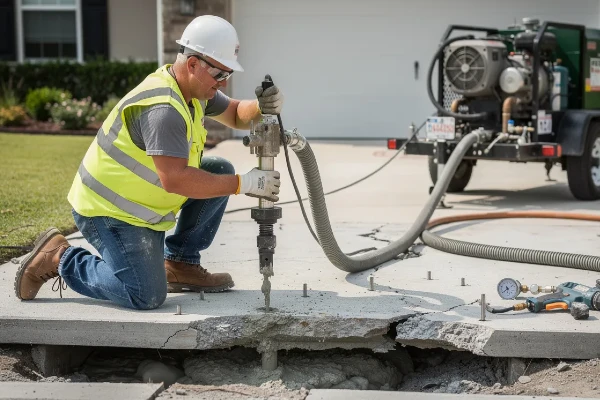
At Powerlift, our team has extensive experience with both traditional mudjacking and modern polyurethane concrete lifting. We understand how soil conditions and drainage issues affect concrete stability, and we use advanced repair techniques to provide long-lasting solutions.
Our goal is simple: restore level concrete while minimizing disruption to your property.
We work with homeowners, property managers, and businesses across the region to repair sunken concrete and prevent future settling.
Contact Powerlift for Professional Concrete Lifting
If you are dealing with sunken concrete, uneven slabs, or drainage issues around your property, it may be time to explore professional concrete leveling options.
At Powerlift, we offer advanced concrete lifting services designed to restore safety, stability, and durability to your concrete surfaces.
Our experienced team will evaluate your property, explain the key differences between mudjacking vs foam injection, and recommend the best repair method for your needs.
Contact Powerlift today for a professional inspection and learn how our polyurethane foam lifting solutions can restore your concrete quickly and efficiently.