

Foundations are necessary for supporting commercial and residential buildings alike, though foundation systems for commercial buildings have a higher capacity to endure a heavier and more demanding structural load. Commercial structures typically have multiple floors, high traffic, and are under constant usage, so commercial foundations should be able to take on the entire load without suffering damages under pressure.
At Powerlift Foundation Repair, we’re quite familiar with commercial construction, particularly with foundations. We’ll walk you through the different types of commercial foundation types used in commercial builds and the various considerations for commercial foundations.
Main Considerations for Commercial Building Foundations

When it comes to commercial foundations, there are several considerations and factors to keep in mind:
Soil Conditions
Soil quality and conditions are important considerations when constructing commercial foundations. Evaluating the type of soil (e.g. clay, sand, or gravel) under a property and its soil load capacity dictates the type of foundation you’ll need. For instance, soft and unstable soil poses higher risks of settlement, so they typically require a deep foundation rather than a shallow foundation (more on this topic later).
Load Bearing Capacity

Unlike residential foundations, commercial foundations need high load-bearing capacities. The various components like the foundation walls and floor slabs need to be able to transfer the building loads, including dead loads (building materials and the structure itself) and live loads (furniture and people) to the underlying soil.
Environment
Environmental factors such as climate and weather conditions as well as wind loads must also be taken into consideration when choosing the right commercial foundation type. These factors can influence soil moisture and soil stability. Additionally, they can increase the risks of foundation settlement. However, with the right commercial foundation type, these issues can effectively be prevented or mitigated.
Shallow Foundation vs. Deep Foundation
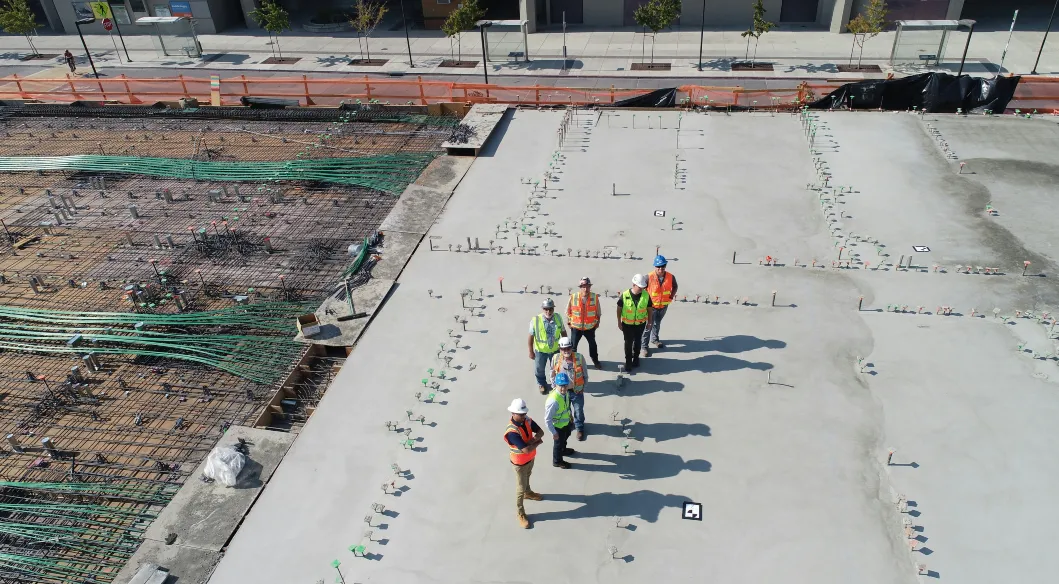
It’s important to be familiar with the difference between shallow foundations and deep foundations to determine which type suits your commercial structure best.
Simply put, shallow foundations are constructed near the surface of the ground and do not go deep into the soil. Generally speaking, shallow foundations are compatible with lighter structures or areas with stable soils.
Examples of shallow foundations include:
- Spread Footing
- Mat Foundation
- Combined Footing
- Strap Footing
- Slab-On-Grade Foundation
On the other hand, a deep foundation goes beyond the surface of the ground and penetrates deeper layers, cutting through unstable soil and latching onto stronger bedrock. Taller structures with heavier loads work best with a deep foundation to ensure maximum stability and support.
Examples of deep foundations include:
- Pile Foundation
- Driven Piles
- Drilled Shafts
- Micropiles
Different Types of Commercial Foundations
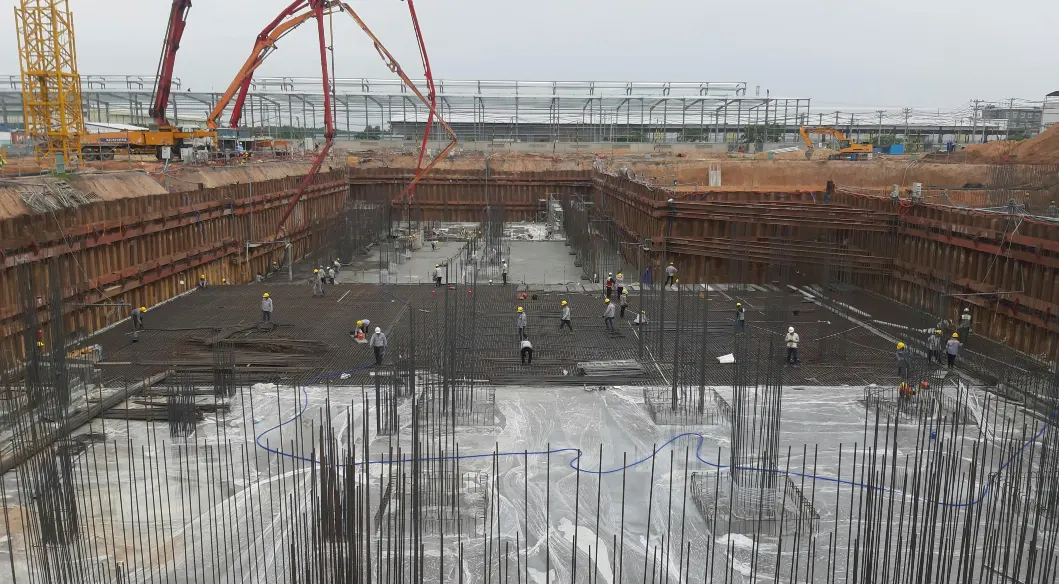
Depending on the specifics of your commercial building, the best type of foundation can vary. However, commercial buildings mostly use concrete foundations reinforced with other materials like steel due to their strength and ability to withstand the building’s weight and prevent foundation failure.
Here’s a rundown of the most common commercial foundation types:
1. Spread Footing or Individual Footing
Spread footings are a shallow foundation type. A large concrete pad or base sits under each column, typically strengthened with rebar or steel mesh. The foundation widens toward its base and carries the column loads, evenly spreading the structure’s weight over a large surface for stability.
2. Mat Foundation or Raft Foundation
Mat foundations or raft foundations are characterized by a concrete slab that covers the bottom surface of the entire building. This type of foundation is typically suitable for cases where the underlying soil is unstable or has low bearing capacity. With a mat foundation, the structure’s weight is spread out over a large area. It’s called a “raft” foundation because it essentially acts as a flatboat by floating the structure over shifting soil conditions.
3. T-Shaped Foundation
T-shaped foundations are also commonly used for commercial foundations, especially in areas where the ground tends to freeze. This type of foundation is recommended for taller structures in colder climates because the foundation design provides deeper support into the ground and effectively spreads the pressure from frozen soil layers. As the name states, the concrete is shaped like an upside-down “T” with the vertical part going deep underground and the horizontal part spreading out parallel to the ground, beneath the frost line.
4. Slab-On-Grade Foundation
Slab-on-grade foundations are characterized by a thick concrete slab that forms the base of a commercial building. The concrete slab foundation sits directly on leveled soil and supports the weight of the building while also evenly distributing the structure’s load across the ground.
5. Spot Footing or Isolated Footing
Spot footings are usually placed right on the ground, but deeper than a slab-on-grade foundation. Spot footing supports the building’s foundation columns by providing maximum stability to a column or pillar and taking on column loads. This type of commercial foundation allows for more flexibility and customization in terms of layout and design because you can use them as much or as little as needed.
6. Pile Foundation
Pile foundations are a type of deep foundation. The piles (resembling long, concrete and steel poles) are driven vertically into the ground and into stable rock or soil. This foundation design allows piles to work like anchors, transferring the weight of the building to stronger rock or soil layers underground.
7. Drilled Shaft or Caisson Foundation
A drilled shaft is created by drilling a hole deep into the ground until it penetrates stable soil, and then the hole is filled with concrete. Drilled shafts bear directly on the stronger soil or rock layers, resisting vertical forces and lateral loads. These are ideal building foundations for tall structures with upper floors as the shafts effectively distribute the weight of the building and prevent issues like foundation settlement.
Trust the Experts: Choose Powerlift Foundation for Your Commercial Foundation Needs
Looking for commercial foundation repair services in Oklahoma, Arkansas, North Carolina, or Tennessee? Powerlift Foundation Repair is a leading foundation repair company that has been providing excellent foundation repair services to thousands of property owners through the years.
Discover why we’re the most trusted foundation repair company in your area by contacting us at 800-562-5438 today for a free estimate!